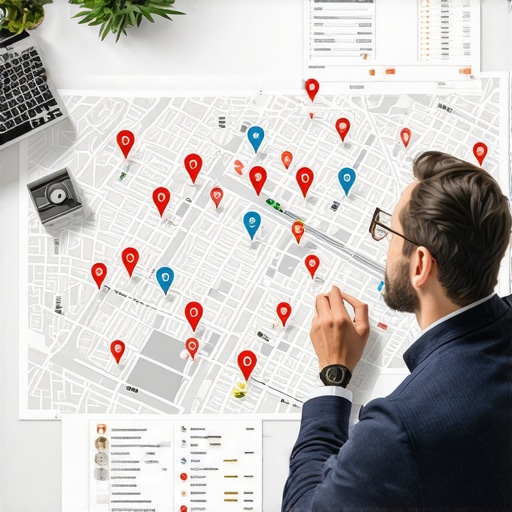
I remember the moment vividly. I had just spent hours tweaking my Google My Business (GMB) profile, desperately trying to outrank local competitors, only to see my listing stubbornly stuck on the second page of Google Maps. Frustration was setting in, and I wondered if I was missing something crucial—something beyond the typical tricks. Then, lightbulb! I realized that relying solely on automated AI tools or generic hacks wasn’t enough anymore.
In fact, recent studies suggest that local search rankings are increasingly influenced by nuanced, human-centered strategies that AI can’t easily replace. According to Moz’s Local Search Ranking Factors survey, factors like proximity, relevance, and reputation weigh heavily, but so do unique, manually optimized signals that only a local expert can tap into. The game is evolving, and so must our approach.
If you’ve faced the same uphill battle, you’re not alone. Many small business owners find themselves spinning their wheels, falling into the trap of outdated SEO tactics that no longer deliver results. The good news? There are proven, non-AI tactics that can give your local presence a genuine boost—tactics that are actionable today.
Today, I want to share the five key strategies that helped me turn things around. These are practical, human-centric methods that focus on authenticity and local relevance—things that no AI can truly imitate. By applying these, you’ll see your GMB ranking improve and attract more nearby customers. Ready to dive in?
Why Your Competitors Are Outranking You (And What to Do About It)
Before diving into the how, let’s talk about why this is so important right now. The local search landscape is becoming fiercely competitive. With the rise of mobile search and voice queries, potential customers are increasingly turning to Google Maps to find nearby services. If your listing isn’t visible, you’re losing valuable business to those who understand these non-AI tactics.
One early mistake I made was relying too heavily on automated review responses. While helpful, it created a disconnect from genuine customer interactions. This oversight hindered my credibility and ranking. It was a costly lesson, but it also pushed me to focus on real engagement and local insights.
By mastering these nuanced tactics, you can outrank big brands, avoid being invisible on search maps, and build a reputation that resonates with your community. If you’re wondering whether these strategies are worth your time, consider this: businesses that optimize their local listings effectively see up to 50% more foot traffic, according to BrightLocal.
So, are you ready to stop playing catch-up and start dominating your local market using methods that stand the test of time—and won’t be replaced by AI? Great. Let’s look at the first step to turning your local SEO around.
Optimize Your Profile for Maximum Impact
Start by filling out every section of your Google My Business (GMB) profile completely. Use consistent NAP (Name, Address, Phone) info across all platforms and ensure your categories are precise—think of categories as the keywords that signal your business to Google. Incorporate relevant keywords naturally into your business description, highlighting what makes you unique. Regularly update your hours, add new services, and upload high-quality images to keep your profile fresh and engaging. For comprehensive optimization techniques, check out this detailed guide.
Harness the Power of Local Keywords
Identify geo-specific keywords that your customers are searching for. Use tools like Google’s Keyword Planner or local search volumes to find high-traffic terms. Incorporate these keywords into your website, blog content, and GMB description to signal relevance. Think of keywords as the address tags for your business; they tell Google precisely where you’re located and what you offer. Embedding these keywords into your content helps you climb the local ranks and appear in nearby searches. For advanced strategies, explore this resource.
Build and Manage Local Reviews
Reviews act as social proof and are a critical ranking factor. Encourage satisfied customers to leave detailed reviews, and respond promptly to all feedback to demonstrate engagement. Avoid fake reviews—they undermine your credibility and violate Google’s policies. Think of reviews as the word-of-mouth of your digital storefront; the more genuine testimonials you accumulate, the more trustworthy you appear. To streamline your review management and solicit more feedback, utilize these settings.
Leverage Local Content and Engagement
Create content that resonates with your local community—blog posts about local events, collaborations with nearby businesses, or community service updates. Use local landmarks and neighborhood names in your content to improve pertinence. Engage with your audience through social media and local groups, fostering relationships that translate into brand loyalty. Think of this as planting roots; the deeper your community ties, the higher your relevance in local searches. For example, I once collaborated with a local charity, which not only boosted my visibility but also earned me valuable backlinks. You can achieve similar results by exploring strategic local SEO.
Correct Profile Errors That Kill Rankings
Regularly audit your GMB profile for inconsistencies or outdated information. Fix duplicate listings, incorrect categories, and inconsistent contact details. These errors confuse Google and harm your ranking potential. Use tools or manual checks to identify issues and rectify them swiftly. Think of your profile as a storefront window; cluttered or broken elements turn customers away and lower your standing in search results. For actionable checklist tips, review this guide.
Stay Ahead with Ongoing Optimization
Local SEO is a moving target. Continually monitor your performance metrics, Google insights, and customer feedback. Experiment with new features like photo or video updates, Q&A sections, and booking integrations. Regularly review your competitor’s profiles to identify gaps or opportunities. Think of this as tending a garden; consistent care ensures your growth outpaces rivals. For cutting-edge tactics on maintaining your local dominance, see this resource.
Many local business owners believe that optimizing their Google My Business (GMB) profile and stuffing keywords are the ultimate strategies for ranking higher on Google Maps. However, this oversimplification often leads to frustration and stagnation. In reality, the most overlooked aspect of local SEO is the nuanced signals that influence ranking algorithms beyond just profile optimization. Recent research indicates that Google considers a complex matrix of local relevance signals, including customer engagement metrics, community involvement, and even the consistency of local citations across multiple platforms. For example, a study by Moz highlights that user interaction signals, such as click-through rates and review velocities, are increasingly significant in local rankings, especially with the rise of AI-driven search behaviors. This means that merely optimizing your GMB is not enough—you must actively foster genuine local engagement and manage your online reputation with precision. Avoid the common trap of focusing only on technical fixes or automated responses; instead, prioritize authentic community participation and strategic content creation that resonates with your local audience. This advanced approach helps to signal to Google that your business is a vital part of the local ecosystem, thus boosting visibility more sustainably. To deepen your understanding of sophisticated local SEO tactics, consider exploring this resource. Remember, the devil is in the details—mastering these hidden signals can be the difference between a stagnant listing and dominant local visibility. Have you ever fallen into this trap? Let me know in the comments.Maintaining and scaling your local business SEO efforts requires the right tools paired with a strategic mindset. I personally rely on advanced software and precise methods that ensure consistent improvements in your Google Maps visibility. One essential tool I swear by is BrightLocal’s Local Search Results Checker. It allows me to track keyword positions for multiple locations daily, giving real-time insights into how my optimization efforts are paying off and alerting me to any drops before they impact rankings. I’ve also found SEMrush’s Position Tracking tool invaluable for competitive analysis and identifying new local keyword opportunities—it’s like having a GPS for your SEO journey. For ongoing content updates and community engagement, I utilize Canva to produce high-quality visuals quickly, keeping my listings fresh and attractive, which Google rewards with higher visibility. Looking ahead, I predict that AI-driven analytics will become more central, enabling hyper-specific adjustments based on customer behavior patterns—think personalized content strategies for each neighborhood or district. To stay ahead, I recommend integrating these tools into your routine and developing a cadence for regular audits and updates. How do I maintain the momentum long-term? I schedule weekly check-ins using a combination of Google Business Insights and these tools, making iterative adjustments focused on real data rather than guesswork. This discipline has been crucial for scaling my local reach without losing authenticity. For example, I use the insights from Google’s recent updates—such as the enhancements discussed in this guide—to refine my strategies and prioritize actions that yield the highest ROI. I encourage you to try setting up an automated dashboard using SEMrush or BrightLocal to monitor your rankings and reviews continuously. Consistency in these technical and community-driven activities is what keeps your Google Maps presence strong over time. Want more specific tactics? Let’s connect and discuss how you can customize these tools to fit your unique local market—reach out through this contact page.
What I Wish I Knew When I Started Optimizing Local Listings
One of the toughest realizations I faced was that Google Maps ranking isn’t just about keywords and reviews; it’s about community integration. I learned early on that building genuine local relationships and participating in community events significantly boosted my profile’s relevance—something no automated tool can replicate. Also, consistently updating your profile with real-time changes and local content keeps your listing fresh and signals active engagement to Google. Finally, I’ve discovered that managing your online reputation even beyond reviews—by addressing concerns and staying transparent—creates a trust factor that propels your visibility over time.
Tools That Keep My Local SEO Momentum Moving
I rely on a few trusted tools that help me stay ahead. BrightLocal’s Local Search Results Checker offers insightful keyword tracking across multiple locations, allowing me to respond quickly to ranking shifts. SEMrush’s Position Tracking gives a competitive edge by identifying emerging opportunities in local keywords. Canva helps me craft visually appealing updates for my profile and social channels, keeping my audience engaged. These tools, combined with strategic content efforts and community involvement, create a robust ecosystem for sustained local SEO success. For a deep dive into optimizing your profile, check out this comprehensive guide.
Your Next Step: Grow Beyond the Basics
Remember, local SEO is a living process—one that demands ongoing effort, trust, and authenticity. Don’t hesitate to experiment with new local engagement tactics or leverage emerging signals that Google prioritizes in 2026. This isn’t just about outranking your competitors today; it’s about building a resilient presence that withstands future algorithm shifts. If you’re committed to pushing your Google Maps visibility further, start integrating community-oriented strategies and continuous profile updates today. Ready to get started? How have you successfully built local trust, and what results did you see? Share your stories below to inspire others on the same journey.
